When illness or injury occurs offshore, medical evacuation is sometimes the safest and most appropriate course of action.
But not every medical incident requires an immediate transfer to shore.
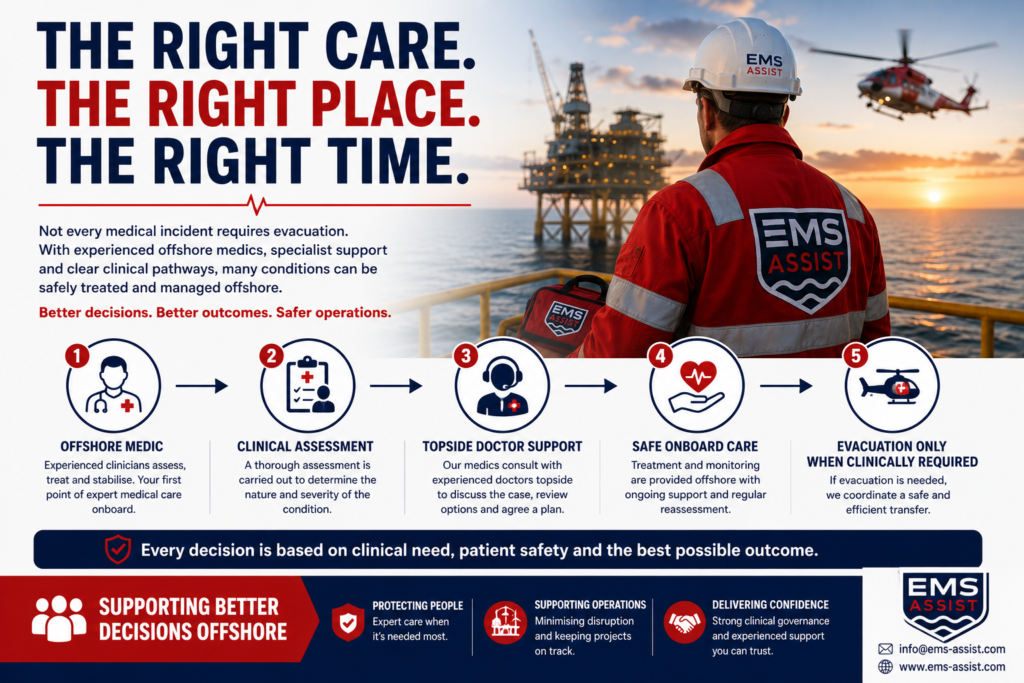
With experienced offshore clinicians, access to specialist medical advice and clear clinical pathways, many conditions can be assessed, treated and safely managed offshore—allowing people to receive the care they need whilst avoiding unnecessary disruption to the operation.
Making The Right Decision
Medical evacuation decisions are rarely straightforward.
Every situation is different.
The nature of the illness or injury, the individual’s medical history, the working environment, weather conditions and access to ongoing care all need to be considered carefully.
The priority is always the same:
To ensure the individual receives safe, appropriate and timely care.
And sometimes that means evacuation.
But sometimes it doesn’t.
Offshore Medics Are Part Of A Wider Clinical Team
Offshore medics are highly skilled professionals, trained to assess, treat and monitor a wide range of medical conditions.
However, one of the strengths of modern offshore healthcare is that offshore clinicians do not have to make difficult decisions in isolation.
Access to experienced topside medical support provides an additional level of clinical expertise.
Complex cases can be discussed.
Treatment plans can be reviewed.
Patients can be monitored and reassessed.
And decisions can be made collaboratively, based on the individual’s condition and what is clinically appropriate.
Safe Onboard Care
Advances in training, medical equipment and clinical support mean that many conditions can now be managed effectively offshore.
Minor injuries may be treated and monitored onboard.
Certain illnesses can be investigated and managed with regular review.
Some patients may require observation and follow-up rather than immediate evacuation.
Of course, patient safety must always come first.
But having the capability to safely manage appropriate cases offshore can reduce unnecessary disruption whilst ensuring people receive the care they need.
Clinical Governance Matters
These decisions should never rely on guesswork.
Strong clinical governance provides the framework for consistent, evidence-based decision making.
Clear escalation pathways.
Access to experienced clinicians.
Appropriate equipment and medicines.
Regular training.
Robust documentation and follow-up.
Together, these elements help ensure that medical decisions are made safely, transparently and in the best interests of the individual.
The Right Care, In The Right Place, At The Right Time
At EMS Assist, we believe offshore healthcare is about more than responding to emergencies.
It’s about giving organisations confidence that when medical situations arise, they have access to experienced professionals, strong clinical support and clear decision-making processes.
Because the best medical outcome isn’t always evacuation.
Sometimes, with the right people, the right support and the right clinical oversight, the safest place for a patient may be exactly where they are.
And ensuring they receive the right care, in the right place, at the right time—that is what good offshore healthcare is all about.