Most of us have experienced an infection at some point. Whether it’s a chest infection, a urinary tract infection or an infected wound, the majority respond well to appropriate treatment.
But occasionally, an infection can lead to something far more serious.
Sepsis is a life-threatening condition that requires urgent medical attention.
Knowing what to look out for — and recognising when someone is becoming seriously unwell — could make a life-saving difference.
What Is Sepsis?
Sepsis occurs when the body’s response to an infection becomes dysregulated, causing damage to its own tissues and organs.
It can develop from almost any infection, including infections affecting the lungs, urinary tract, abdomen or skin.
Although most infections will never progress to sepsis, it’s important to recognise when something may be wrong.
The Early Signs Aren’t Always Obvious
One of the challenges with sepsis is that it doesn’t always look serious at first.
Someone might simply feel unusually unwell, weak or exhausted.
They may have a fever or chills, but sepsis can also occur without a high temperature.
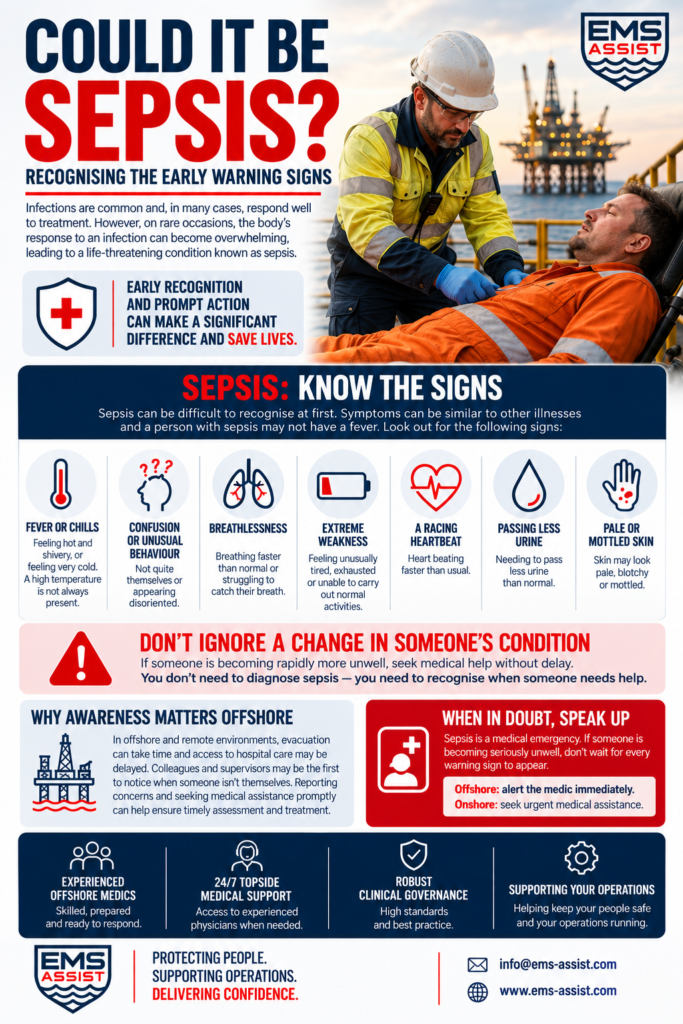
Other warning signs can include:
- Confusion or unusual behaviour — someone appearing disorientated or not quite themselves.
- Breathlessness — breathing faster than normal or struggling to catch their breath.
- Extreme weakness — feeling unusually tired, faint or unable to carry out normal activities.
- A racing heartbeat — the heart beating noticeably faster than usual.
- Changes in skin appearance — skin becoming unusually pale, blotchy or mottled.
- Passing much less urine than normal — which can be a sign that the body isn’t functioning as it should.
These symptoms can have many causes and don’t necessarily mean someone has sepsis. However, a person who is becoming rapidly more unwell needs urgent medical attention.
Don’t Ignore a Change in Someone’s Condition
Sometimes, the most important warning sign is simply noticing that something isn’t right.
A colleague who seemed fine earlier is now confused.
Someone with an infection is becoming increasingly breathless.
A person who was managing their normal activities suddenly appears extremely weak or unwell.
These changes should never be dismissed.
You don’t need to diagnose sepsis yourself.
Recognising that someone may be seriously ill and getting medical help promptly is what matters.
Why Awareness Matters Offshore
When working offshore or in remote environments, medical assistance may not be as immediately accessible as it is onshore.
Evacuation can take time, and access to hospital care may be delayed.
That’s why awareness across the whole workforce matters.
Offshore medics have the training and clinical support to assess and manage illness, but colleagues and supervisors may be the first to notice that someone isn’t themselves.
Recognising the warning signs, reporting concerns and seeking medical assistance promptly can help ensure that a potentially serious condition is assessed without unnecessary delay.
You don’t have to be a medical professional to recognise that someone needs help.
When in Doubt, Speak Up
Sepsis is a medical emergency, but early recognition and prompt treatment can improve outcomes.
If someone is becoming seriously unwell, don’t wait for every warning sign to appear.
Offshore, alert the medic immediately.
Onshore, seek urgent medical help.
At EMS Assist, we understand the importance of timely access to medical expertise, particularly in remote and challenging environments.
Through our experienced offshore medics, physician-led topside medical support and clinical governance, we help organisations provide appropriate healthcare support when it matters most.
Know the signs. Notice the changes. Don’t delay seeking help.
For more information about EMS Assist’s offshore medical services, contact:
info@ems-assist.com
www.ems-assist.com
Protecting People | Supporting Operations | Delivering Confidence