When a medical emergency occurs offshore, the first person to reach the casualty is not always the medic.
Often, it’s a colleague.
Someone working nearby who recognises that something is wrong, raises the alarm and provides immediate assistance while the medic makes their way to the scene.
In offshore and remote environments, where access to additional medical support may be limited and evacuation can take time, those first few minutes can make a significant difference.
This is why having a capable, well-prepared first aid team is such an important part of offshore medical emergency preparedness.
The First Few Minutes Matter
Medical emergencies can happen without warning.
A colleague may collapse, suffer a serious injury or suddenly become unwell.
In those initial moments, recognising the emergency, ensuring the scene is safe, raising the alarm and providing appropriate first aid can be critical.
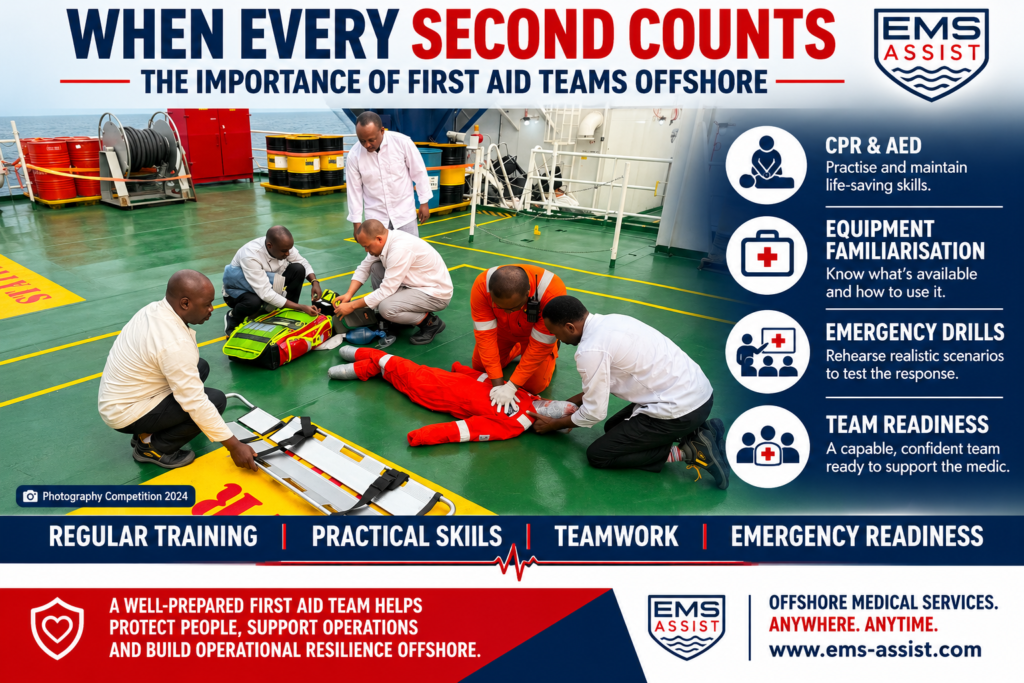
Depending on their training and competence, first aiders may need to begin CPR, use an automated external defibrillator (AED), control severe bleeding or provide other immediate assistance until the medic arrives.
However, the first priority is always safety. Rushing into a hazardous situation without assessing the risks could result in additional casualties.
An effective response begins with recognising the emergency, protecting those involved and taking appropriate action without unnecessary delay.
The Medic’s Role in Preparing the First Aid Team
On offshore vessels and installations, the medic will typically be supported by a designated first aid team drawn from the wider workforce.
An important part of the medic’s role is ensuring that this team remains prepared to assist during a medical emergency.
Regular first aid training, often delivered weekly, provides opportunities to refresh essential skills, practise emergency scenarios and maintain familiarity with onboard medical equipment and procedures.
At EMS Assist, our offshore medics deliver these training sessions as part of their ongoing responsibilities, helping first aid teams maintain their knowledge, confidence and readiness to respond.
Training may cover a range of situations, including CPR, AED familiarisation, casualty assessment, bleeding control and safe casualty handling.
It also allows the medic to understand the team’s capabilities, identify areas for improvement and ensure personnel know how to work together during an emergency.
The objective isn’t simply to have a trained first aid team on board. It’s to have a team that regularly practises together and is prepared to respond when needed.
Knowing Your Vessel and Your Equipment
Every vessel and offshore installation has its own layout, equipment and emergency arrangements.
First aid teams should be familiar with the location of first aid kits, AEDs, stretchers and other equipment they may be expected to use.
They should also understand relevant communication systems, muster arrangements and casualty evacuation routes.
For example, how would a casualty be safely moved from an engine room or another difficult-to-access area?
Would the team know how to raise the alarm if their usual communication method was unavailable?
Are personnel familiar with the equipment they may be asked to assist with?
These are practical questions that can be explored during onboard training and familiarisation sessions.
The more familiar personnel are with their working environment and emergency arrangements, the better prepared they are to support an organised response.
What If the Medic Becomes the Casualty?
Offshore medics play a central role in managing medical emergencies, but there is another scenario that organisations should consider.
What happens if the medic is the person who becomes seriously ill or injured?
On some projects, the medic may be the only healthcare professional on board.
If they are unable to provide care, the first aid team may become particularly important in delivering immediate assistance and activating the agreed emergency response arrangements.
This highlights why first aid preparedness should never rely entirely on the availability of one individual.
Personnel need to understand their responsibilities, recognise the limits of their competence and know how to access appropriate emergency assistance and topside medical support.
A well-prepared first aid team provides an additional layer of resilience when unexpected situations arise.
Practising for the Unexpected
Emergency situations can be stressful, particularly for personnel who do not regularly encounter medical incidents.
Regular drills and practical exercises allow first aid teams to apply their knowledge in realistic scenarios.
These might involve responding to a collapsed colleague, managing a serious bleeding injury or assisting with the movement of a casualty from a difficult location.
Exercises also provide an opportunity to test communication pathways, practise teamwork and identify gaps in equipment familiarisation or individual responsibilities.
Importantly, they allow teams to learn and improve in a controlled environment.
A useful principle highlighted in the EMS Assist First Aid Manual is:
“Don’t trust it. Test it.”
A response plan may look comprehensive on paper, but practical exercises help establish whether the arrangements work as intended.
Working Together When It Matters Most
Effective emergency response is rarely the responsibility of one person.
First aiders, offshore medics, vessel management, HSE personnel and onshore medical support may all have a role to play.
Once the medic takes responsibility for the clinical response, first aiders may continue to assist within their training and competence, helping with equipment, communication or other practical tasks.
Regular training helps build familiarity between the medic and the first aid team, so that individuals understand their roles and how they can support one another.
Clear responsibilities and effective communication allow the wider team to support patient care while the response is coordinated appropriately.
Maintaining Readiness Throughout the Project
First aid readiness shouldn’t be treated as a one-off activity completed during mobilisation.
Personnel change, projects evolve and skills need to be maintained.
Weekly training sessions, equipment familiarisation, emergency exercises and lessons learned all contribute to maintaining an effective response capability.
They also give the medic opportunities to identify training needs, reinforce good practice and adapt exercises to the risks associated with the operation.
A capable first aid team isn’t simply trained once. Its readiness is maintained throughout the project.
Preparing People to Respond
When a medical emergency happens offshore, the actions taken in the first few minutes can make a significant difference.
Ensuring that first aid teams have the appropriate training, practical knowledge and confidence to respond is an important part of protecting the offshore workforce.
At EMS Assist, our experienced offshore medics play an active role in preparing the wider workforce through regular first aid training, practical familiarisation and emergency exercises.
Alongside physician-led topside medical support and robust clinical governance, this helps our clients maintain a coordinated approach to offshore medical emergency preparedness.
If you’re planning a new offshore project or would like to discuss your medical support and first aid arrangements, we’d be pleased to hear from you.
Email: info@ems-assist.com
Website: www.ems-assist.com
Because when every second counts, having people who are prepared to act can make all the difference.
Protecting People | Supporting Operations | Delivering Confidence