Working offshore often means operating in some of the world’s most challenging environments. From the cold waters of the North Sea to remote locations near the southern tip of South America, low temperatures, strong winds and difficult operating conditions can quickly turn routine activities into serious safety risks.
Cold weather is more than an inconvenience. Exposure can affect concentration, reduce dexterity, increase fatigue and contribute to potentially serious medical conditions, including cold stress, frostbite and hypothermia.
In remote environments, where access to definitive medical care may be hours away, recognising the risks and taking preventative measures is particularly important.
Here are five practical ways to help protect yourself and your colleagues when working in cold and remote conditions.
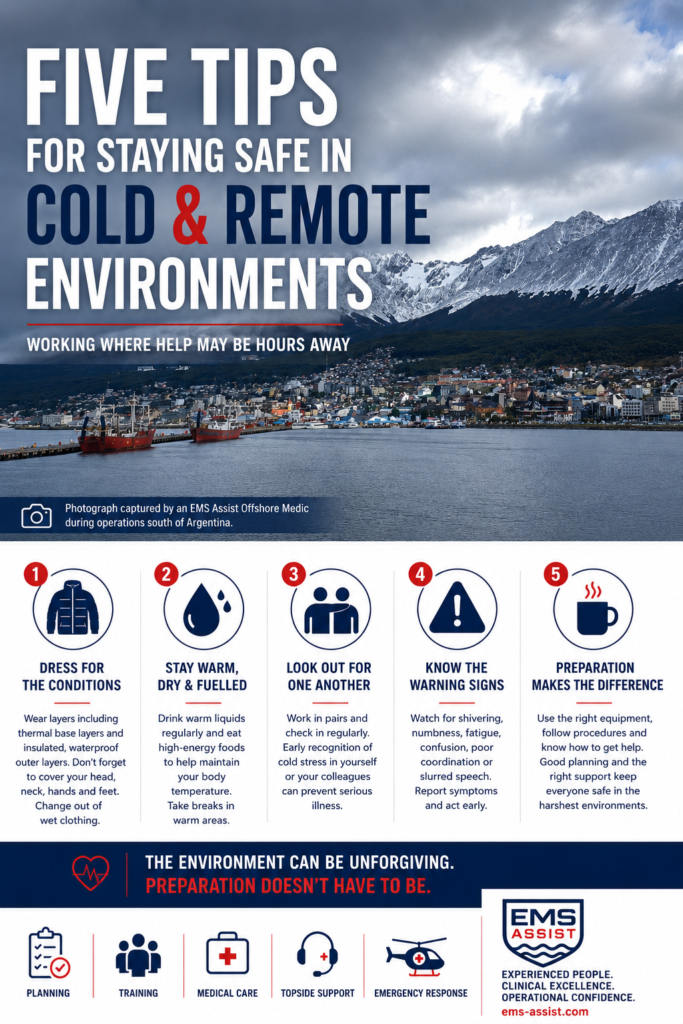
- Dress for the Conditions
Appropriate clothing is one of the most effective ways to protect against cold exposure.
Wear suitable thermal base layers beneath insulated outer clothing, ensuring that all garments and personal protective equipment (PPE) remain appropriate for the task and working environment.
Pay particular attention to protecting exposed areas, including the head, neck, hands and feet. Windproof and waterproof outer layers can help reduce heat loss, particularly in exposed offshore environments.
If clothing becomes wet, change into dry clothing as soon as it is safe and practical to do so. Wet clothing increases heat loss and can significantly increase the risk of cold-related illness.
Remember that PPE should provide protection without restricting movement, visibility or the ability to carry out tasks safely.
- Stay Warm, Dry and Fuelled
Working in cold conditions can place additional demands on the body, particularly during physically demanding activities.
Eating regular meals, maintaining adequate hydration and taking appropriate rest breaks all contribute to maintaining wellbeing and performance throughout a shift.
Warm, non-alcoholic drinks can provide comfort, while access to heated welfare facilities allows personnel to recover from prolonged exposure.
Where possible, plan work to minimise unnecessary time in exposed areas and incorporate regular opportunities to warm up, particularly during periods of strong winds, rain or low temperatures.
Small preventative measures, consistently applied, can make a significant difference over the course of a working day.
- Look Out for One Another
One of the most important safety measures in remote environments is also one of the simplest: looking out for your colleagues.
Cold stress does not always develop suddenly, and the person affected may not immediately recognise that something is wrong.
Early changes can be subtle. A colleague may appear unusually quiet, become clumsy, struggle with routine tasks or show signs of increasing fatigue.
Working in pairs where appropriate, maintaining regular communication and checking on colleagues during periods of prolonged exposure can help identify concerns before they become more serious.
Encouraging an environment where personnel feel comfortable reporting symptoms or raising concerns is equally important.
Recognising that something isn’t right, and acting on it early, can prevent a minor problem from becoming a medical emergency.
- Know the Warning Signs
Recognising the signs of cold-related illness is essential, particularly when working in locations where medical evacuation may be delayed.
Symptoms to watch for include:
- Persistent shivering or feeling excessively cold
- Numbness or reduced sensation in exposed areas
- Unusual fatigue, weakness or drowsiness
- Poor coordination or difficulty carrying out familiar tasks
- Confusion, changes in behaviour or slurred speech
- Pale, unusually firm or discoloured skin, which may indicate a cold injury
As hypothermia becomes more severe, shivering may reduce or stop altogether. The absence of shivering should therefore never be taken as reassurance that someone is safe.
If cold-related illness is suspected, stop further exposure, move the person to a sheltered environment where safe, and seek prompt medical advice.
Replace wet clothing where practical, insulate the person from further heat loss and follow the project’s medical emergency procedures.
Suspected moderate or severe hypothermia requires careful handling and urgent medical assessment. An affected person should not be encouraged to walk or exert themselves unnecessarily.
In offshore environments, early communication with the onboard medic and, where appropriate, topside medical support can help guide the response and determine whether further treatment or evacuation is required.
Early recognition and timely intervention are critical to preventing deterioration.
- Preparation Makes the Difference
Cold and remote environments present additional challenges, but many of the associated risks can be reduced through effective planning and preparation.
Before operations begin, consideration should be given to the environmental conditions, the nature of the work, available welfare facilities and the arrangements for responding to medical emergencies.
Important measures include suitable cold-weather PPE, access to warm and dry rest areas, effective communications and clear procedures for recognising and managing cold-related illness.
Competent first aid teams and experienced offshore medics also play an important role in maintaining medical readiness.
Regular training and emergency exercises help personnel understand their responsibilities, familiarise themselves with available equipment and practise how they would respond if a colleague became unwell.
In remote locations, where weather conditions, vessel movements or geographical distance may affect evacuation arrangements, a well-developed Medical Emergency Response Plan (MERP) is particularly important.
It should consider the medical risks associated with the operation, the resources available on site, access to clinical advice and the practical arrangements for transferring a casualty to a higher level of care.
The more challenging the environment, the more important it becomes to prepare before an emergency occurs.
Looking After People in Challenging Environments
Working in cold and remote locations requires more than appropriate clothing and an awareness of the weather. It requires a proactive approach to workforce health, effective communication and medical arrangements that reflect the realities of the operating environment.
At EMS Assist, we understand that delivering healthcare offshore is about more than responding to emergencies. It’s about helping clients prepare for them.
Whether supporting operations in the North Sea or some of the world’s most remote locations, our experienced offshore medics, 24/7 physician-led topside medical support and project-specific Medical Emergency Response Plans help organisations protect their people in challenging environments.
From identifying potential medical risks to supporting emergency preparedness and ongoing workforce wellbeing, we work alongside our clients to help ensure the right arrangements are in place before they’re needed.
Because when you’re working in extreme environments, preparation is one of the most important safety measures of all.
Planning Operations in a Cold or Remote Environment?
EMS Assist provides integrated medical and HSE support to offshore energy, marine and remote projects worldwide.
If you’re planning operations in a challenging environment, we’d be pleased to discuss how we can support your workforce and strengthen your medical preparedness.
Email: info@ems-assist.com
Website: www.ems-assist.com
Protecting People | Supporting Operations | Delivering Confidence