Norovirus, commonly known as the winter vomiting bug, is a highly contagious infection that causes vomiting and diarrhoea. Although it can occur throughout the year, cases typically increase during the winter months.
For offshore personnel, where accommodation, dining facilities and working environments are shared, even a single case can present a wider challenge.
Recognising symptoms early and taking appropriate preventative measures can make a significant difference to workforce wellbeing and operational continuity.
Recognising the Symptoms
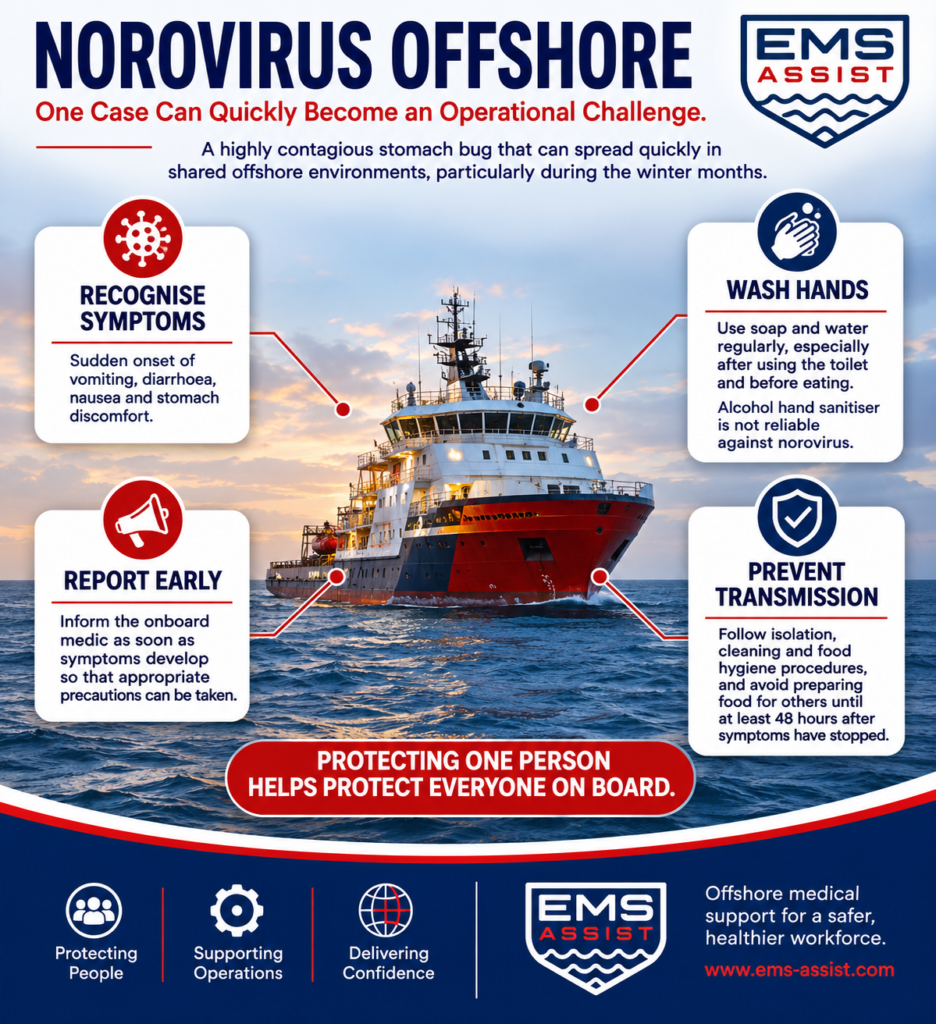
Norovirus symptoms usually develop suddenly, typically within 12 to 48 hours of exposure.
Common symptoms include:
- Nausea and vomiting
- Diarrhoea
- Stomach discomfort or cramps
- Headaches and aching limbs
- A raised temperature
Most people recover within two to three days, although vomiting and diarrhoea can lead to dehydration.
Anyone developing symptoms offshore should report them promptly to the onboard medic, who can assess their condition and advise on appropriate precautions.
Why Norovirus Is a Particular Concern Offshore
Offshore vessels and installations bring people together in shared accommodation, dining facilities, bathrooms and working areas.
Norovirus spreads easily through close contact with infected individuals, contaminated surfaces and food or drink.
In these environments, an infection can spread quickly, potentially affecting multiple personnel and disrupting operations.
Early reporting is essential. What initially appears to be an isolated illness could be the first indication of a wider outbreak.
Preventing the Spread
Simple precautions can significantly reduce the risk of norovirus spreading offshore.
Wash hands thoroughly. Soap and water are particularly important, as alcohol-based hand sanitiser alone is not reliable against norovirus.
Report symptoms early. Personnel experiencing vomiting or diarrhoea should contact the onboard medic and follow the vessel’s infection prevention procedures.
Maintain good hygiene. Frequently touched surfaces, shared facilities and contaminated areas should be cleaned using appropriate disinfectants and established procedures.
Avoid preparing food for others. Anyone experiencing symptoms should avoid handling food and remain away from normal duties until at least 48 hours after symptoms have stopped, in accordance with medical advice and project procedures.
Managing Norovirus Offshore
Most cases resolve without specific treatment, with rest and adequate fluid intake being the main priorities. Oral rehydration solutions can help replace fluids and electrolytes lost through vomiting and diarrhoea.
However, persistent vomiting, an inability to retain fluids, signs of significant dehydration or a deterioration in condition require prompt medical assessment.
Managing a suspected outbreak also requires effective communication.
Offshore medics play an important role in assessing affected personnel, monitoring symptoms, identifying patterns of illness and liaising with vessel management and topside medical support.
Where several personnel develop similar symptoms within a short period, early coordination can help ensure appropriate infection prevention measures are implemented.
The offshore medic may also work with vessel management and catering personnel to support suitable isolation arrangements, hygiene precautions and the monitoring of further cases.
Managing an outbreak is not simply about treating individual patients. It’s about protecting the wider workforce.
Preparation Protects People
Norovirus may be a common seasonal illness, but its potential impact offshore should not be underestimated.
Clear reporting procedures, effective hygiene practices, communication between medical and operational teams, and appropriate medical support all contribute to reducing the risk of an outbreak.
At EMS Assist, our experienced offshore medics, 24/7 physician-led topside medical support and clinical governance arrangements help clients protect workforce health and maintain medical preparedness in remote environments.
Because preventing the spread of illness is just as important as responding when someone becomes unwell.
For more information about our offshore medical services, contact info@ems-assist.com or visit www.ems-assist.com.
Protecting People | Supporting Operations | Delivering Confidence