Why equipment readiness, routine inspections and effective clinical governance matter in remote environments.
Having medical equipment on board is an essential part of offshore safety. But having the equipment available and knowing it is ready to use are two very different things.
In offshore and remote environments, where access to replacement equipment, medication and additional medical assistance may be limited, maintaining medical readiness is particularly important.
A depleted oxygen cylinder, an expired medication or a defibrillator with an insufficient battery charge could have serious consequences during a medical emergency.
So, what should effective offshore medical preparedness look like?
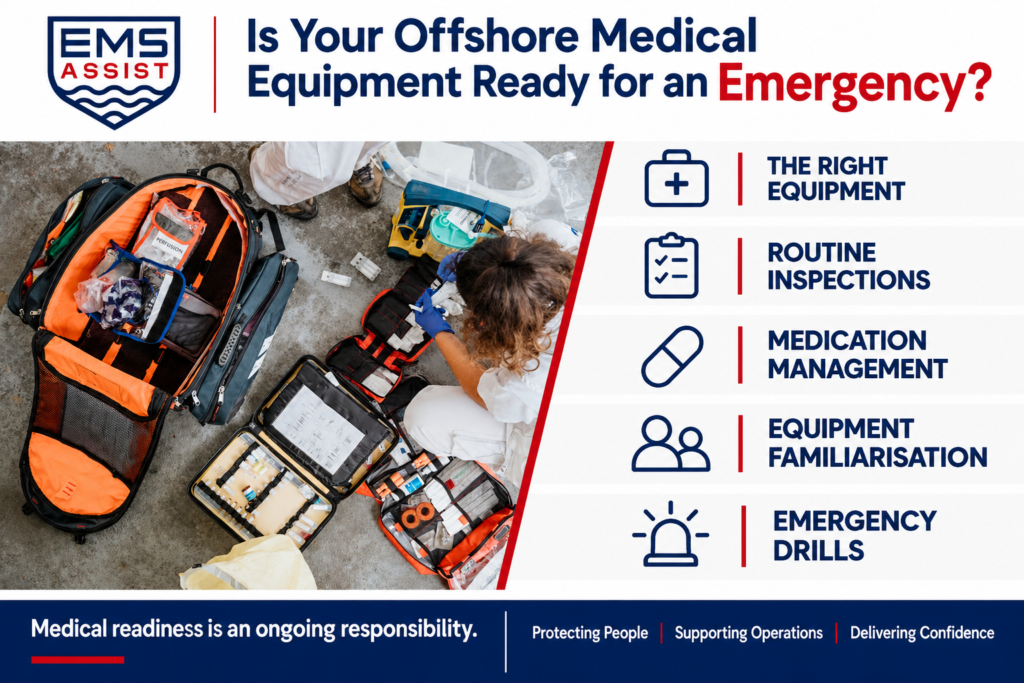
- Having the Right Equipment
Medical equipment and medication should be appropriate for the working environment, the number of personnel on board and the risks associated with the operation.
Requirements may vary considerably between vessels, offshore installations and remote worksites.
Understanding these requirements from the outset helps ensure that medical facilities are suitably equipped to manage both routine healthcare needs and potential emergencies.
- Routine Inspection and Maintenance
Medical equipment should be regularly inspected and maintained to ensure it remains functional and available when required.
Routine checks should include:
- Defibrillator battery status and functionality
- Medical oxygen supplies
- Airway and resuscitation equipment
- Stretchers and casualty evacuation equipment
- First aid and eyewash stations
- Emergency medical packs and consumables
Documenting these inspections provides assurance that equipment is being monitored and that any identified issues can be addressed before an emergency occurs.
- Effective Medication Management
Maintaining an offshore medical inventory involves more than ensuring sufficient stock is available.
Medication expiry dates, storage conditions, stock replenishment and controlled drug management all require careful oversight.
Where medications require refrigeration, temperature monitoring is essential to ensure appropriate storage conditions are maintained.
Effective stock management also helps reduce unnecessary waste and allows replacement supplies to be arranged before they are needed.
- Equipment Familiarisation and Medic Handovers
Even experienced offshore medics need time to familiarise themselves with the equipment and facilities available on each project.
A comprehensive handover should include the location of medical and rescue equipment, medication inventories, equipment functionality and emergency response responsibilities.
Knowing where equipment is located and being confident in its operation can save valuable time during an emergency.
- Putting Preparedness into Practice
Regular emergency drills provide an opportunity to test equipment readiness, communication and coordination between offshore medics, first aid teams and other relevant personnel.
They also help identify potential gaps in emergency arrangements and provide opportunities for improvement.
An emergency should never be the first time a team discovers that equipment is unavailable, unfamiliar or not functioning as expected.
Medical Readiness Is an Ongoing Responsibility
Medical preparedness does not end when equipment is delivered or a medic is mobilised.
It requires ongoing inspections, effective stock management, clear procedures, competent personnel and robust clinical governance.
At EMS Assist, we support offshore and remote operations through the provision of medical equipment and supplies, experienced offshore medics, 24/7 physician-led topside medical support and comprehensive clinical governance arrangements.
Our integrated approach helps clients maintain medical readiness throughout the lifecycle of their projects.
Because having the right equipment is only the beginning. Ensuring it is ready when it matters most is what makes the difference.
For more information about our offshore medical services and medical equipment and supplies, contact info@ems-assist.com or visit www.ems-assist.com.
Protecting People | Supporting Operations | Delivering Confidence