When people think about heat illness, they often picture workers in extreme temperatures or tropical climates.
In reality, heat stress can develop in a wide range of offshore and remote working environments. Air temperature is only one factor. Humidity, physically demanding work, protective clothing, poor hydration and individual health factors can all affect the body’s ability to regulate its internal temperature.
When the body can no longer cool itself effectively, heat illness can develop—and if early warning signs are missed, the consequences can become serious.
Recognising the Early Signs
Heat illness rarely develops suddenly.
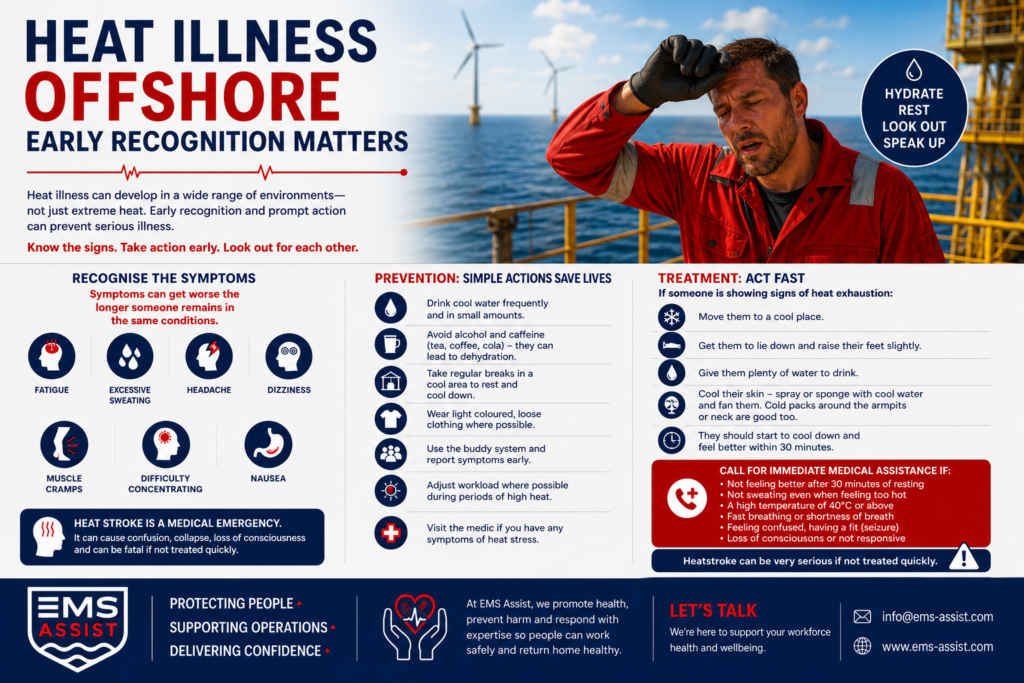
It often begins with symptoms that may appear mild but should never be ignored, including:
- Fatigue
- Headache
- Excessive sweating
- Muscle cramps
- Dizziness
- Difficulty concentrating
- Nausea
Without prompt action, these symptoms can progress to confusion, collapse and, in severe cases, heat stroke—a life-threatening medical emergency requiring immediate treatment.
Recognising these early warning signs allows intervention before a situation escalates.
Looking Out for Each Other
Offshore operations rely on teamwork, and that extends beyond carrying out the job safely.
Colleagues are often the first to notice when someone isn’t behaving as they normally would.
Are they unusually tired?
Are they struggling to concentrate?
Have they become confused, unsteady or unusually quiet?
Have they stopped sweating despite appearing extremely hot?
These changes should never be dismissed.
Encouraging people to raise concerns early and creating a culture where colleagues look out for one another can play an important role in preventing serious illness.
Prevention Starts Before Symptoms Appear
Many cases of heat illness are preventable through simple but effective control measures.
These include:
- Staying well hydrated throughout the working day.
- Taking regular breaks in cooler areas where possible.
- Wearing appropriate clothing and PPE for the task.
- Avoiding excessive caffeine and alcohol before and during shifts.
- Recognising early symptoms and reporting them promptly.
- Seeking medical advice before symptoms become more severe.
Heat illness is not limited to people working in direct sunlight.
It can occur whenever the body generates more heat than it is able to lose, regardless of the surrounding environment.
The Role of Offshore Medical Teams
Preventing heat illness is just as important as treating it.
Offshore medical teams support organisations by:
- Delivering health promotion and awareness campaigns.
- Educating the workforce on recognising early symptoms.
- Monitoring trends in heat-related presentations.
- Providing advice on hydration and preventative measures.
- Identifying individuals who may be at increased risk.
- Supporting management with practical health risk reduction strategies.
This proactive approach helps reduce risk, protect workforce wellbeing and minimise disruption to operations.
Protecting People Through Prevention
At EMS Assist, we believe the most effective healthcare is proactive.
Health promotion, occupational health, early intervention and emergency preparedness all play an important role in protecting people before a medical emergency occurs.
By helping organisations recognise risks early and supporting a culture where health concerns are taken seriously, we can help create healthier, safer and more resilient workplaces.
Because protecting people starts long before an emergency happens.
Looking to strengthen your workforce health strategy?
EMS Assist provides integrated offshore medical support, occupational health services, physician-led topside support and health promotion programmes that help organisations protect their people and support safe operations.
If you’d like to discuss how we can support your project, we’d be pleased to help.
📧 info@ems-assist.com
🌐 www.ems-assist.com
Protecting People | Supporting Operations | Delivering Confidence